
Sam Fender contributes twenty-five thousand pounds Mercury Prize to independent live spaces

The artist has donated the entirety of his £25k honor prize money to the MVT, which operates to preserve the UK's small concert spaces.
Fender was presented with the cheque on mid-October as his latest record People Watching was named the best record of the last 12 months.
Fender has decided to give the cash to the trust, in recognition of the crucial part small stages had in his early career.
"I personally would not have achieved this success if it hadn't been for all the performances I played around the region, and further afield, when I was beginning," stated Fender. "These locations are renowned, but they are facing challenges."
Beginning in 2023, more than 150 of these venues have ceased operations – roughly 16% of the whole industry in the UK.
In the last year, top acts including Pulp, Coldplay, Katy Perry and Ed Sheeran have all backed the trust in its attempts to support the industry, by adding a modest fee to their ticket costs, which goes to help smaller concert halls.
Sam Fender also joined in, collecting more than £100,000 on his 2024 arena tour to assist numerous small stages across England, Scotland, and Wales.
These funds assisted spaces that were facing possible closure due to challenges arising from flooding, fires and personal losses, as well as permit problems, conflicts and noise complaints.
Additional spaces were granted monetary aid in upgrading facilities and technical equipment that positively impacted artists and audiences.
"The notion that revenue from performances in large arenas supports the independent spots, where it all starts for performers like me, is just sensible," the star has commented.
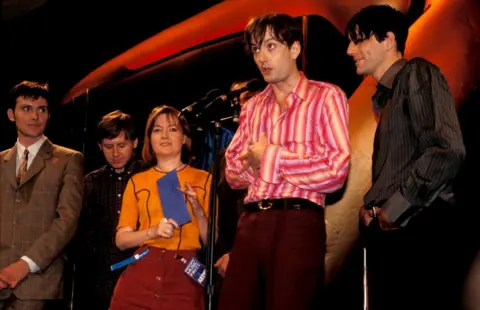
The musician is far from the only musician to give his honor winnings to good deeds.
In Pulp earned the award in 1996 for their record the album, vocalist Cocker stated that the group would donate their prize money to the charity War Child.
In 2002, musician Ms Dynamite shared her bounty between several charities, like the NSPCC and a Sickle Cell charity.
"I also gave a thousand pounds to my local community centre, to their classes, because I trained in gymnastics when I was growing up and they required better apparatus," the artist told outlets.
In recent years, the band donated their winnings to the local youth club that developed their act, as well as other grassroots music organisations.
And 1994 winners the group contributed their winnings to a MS organization after a close contact was identified with the condition.
"Receiving the award was quite enough," stated artist Heather Small. "The prize was the bonus but we didn't require the bonus, because we had the cake. So our winning touched somebody else's life."
Last week, the trust announced it had rescued a couple of small stages in the South East, by bringing them into local control.
The first in that area and The Croft in Bristol were acquired under the public acquisition scheme, which is backed by the arts council and enthusiasts who acquire "stakes" in the buildings.